Player injury and lack of insurance coverage: club liability according to the CAS

Can a football club be held liable for the economic consequences of a serious injury even when it did not directly cause it? According to the Court of Arbitration for Sport (CAS), the answer can be affirmative when the club has failed to fulfill its insurance and social security obligations, exposing the player to consequences that proper coverage could have avoided. This is one of the most significant principles established in the CAS 2025/A/11511 award, Donny van Iperen v. FC Zimbru Chisinau, rendered on October 16, 2026.
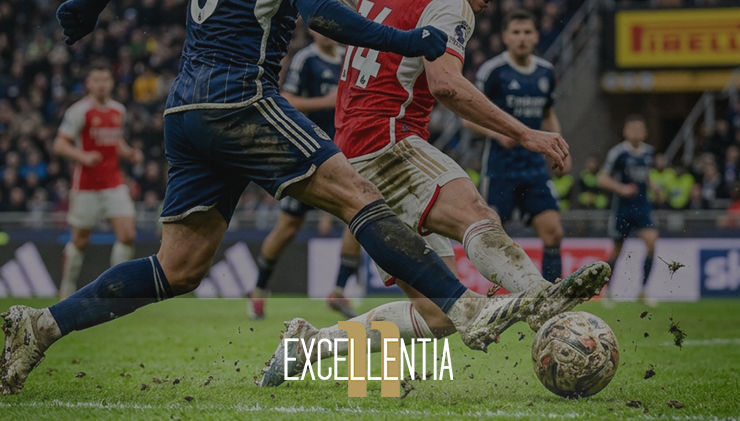
The dispute stems from the sports employment relationship established in July 2022 between Dutch player Donny van Iperen and Moldovan club FC Zimbru Chisinau. During a match played on August 6, 2022, the player suffered a very severe head injury following a collision with the opposing goalkeeper. The consequences of the injury were particularly significant: after a long course of treatment and rehabilitation, the Dutch authorities certified his permanent incapacity for work.
Excellentia11 assists players, sports agents, and clubs in drafting and verifying sports employment contracts, managing international disputes, and protecting property and compensation rights before sports justice bodies; contact us for an evaluation of your situation.
However, the employment contract contained specific obligations incumbent upon the club. In particular,the club had undertaken to take out, at its own expense, insurance against illness and injury risks arising from training activities and participation in competitions, to reimburse treatment and recovery costs, and to handle procedures relating to social security and insurance contributions required by Moldovan legislation.
During the proceedings, a decisive fact emerged: the player had never been covered either by private insurance or by the Moldovan public social protection system. The club justified this circumstance by citing bureaucratic delays in obtaining the residence permit necessary to complete the insurance procedure.However, the CAS deemed this explanation insufficient.
Contract Renewals Tied to Competition Participation: The Limit of Art. 18(2) RSTP
A first issue addressed by the CAS concerned the duration of the contractual relationship. An auxiliary agreement provided for the automatic renewal of the contract in the event of the club's qualification for European competitions, for each month of stay in the UEFA Conference League. After Zimbru qualified for the competition, the club was eliminated on August 1, 2023. The FIFA Dispute Resolution Chamber (DRC)had therefore recognized the extension of the contract until August 31, 2023, limiting the player's right to additional remuneration to two monthly payments. The player argued, instead, that the relationship should be considered extended until the end of the 2023/2024 sports season.
The CAS held that the monthly renewal mechanism provided by the auxiliary agreement was incompatible with the purpose of Art. 18(2) of the FIFA Regulations on the Status and Transfer of Players (RSTP).This provision aims to guarantee contractual stability and economic certainty to the player, preventing the duration of the relationship from being conditioned by the team's sporting performance and its permanence in a given competition. According to the CAS, such a provision would also risk compromising the integrity of competitions by allowing changes to squad composition outside of registration periods.
The most interesting part of the reasoning, however, concerns the consequences of this incompatibility. The CAS did not declare the entire contractual extension ineffective, but only the mechanism that made its duration conditional on monthly participation in the European competition. Since the prerequisite for renewal had occurred, the relationship had to be considered extended anyway. Applying the contra proferentem principle and noting the absence of evidence demonstrating a different intent of the parties, the CAS recognized the continuation of the contract until June 30, 2024, with the consequent right of the player to the remuneration accrued during the period.
The Obligation to Insure the Player and Club Liability
The core of the award concerns the failure to arrange insurance and social security coverage. The CAS first noted that the contractual obligation to insure the player was not subject to any condition. The administrative procedures necessary to obtain the residence permit and complete the insurance procedure therefore fell within the sphere of responsibility of the club.
Bureaucratic delays were not considered a case of force majeure. According to the CAS, such procedures are foreseeable, especially for a professional club accustomed to hiring foreign players. Furthermore, the club had chosen to field the player while knowing that the necessary steps to guarantee him insurance coverage had not been completed. The club's liability was not limited to the failure to take out a private policy. The CAS also noted the failure to register the player with the Moldovan social security system (CNAS), in violation of obligations under the contract and applicable law.
Particularly significant is the assessment that the club cannot transfer to the player the risk deriving from its own insurance omission, all the more so when it has knowingly allowed the player to perform competitive activities without the required safeguards. The club was therefore held in breach of its contractual obligations.
Medical Expenses, Pecuniary Damage, and Non-Pecuniary Damage
The CAS also recognized the distinct obligation of the club to reimburse treatment and recovery costsresulting from the injury. This obligation was not subject to a specific economic or temporal limit and, above all,did not cease with the expiration of the employment relationship: since the injury occurred during the performance of the contract, the reimbursement obligation had already consolidated.
The decision also stands out for the approach adopted in evidentiary matters. Referring to Art. 42(2) of the Swiss Code of Obligations, the CAS recognized the possibility of resorting to an equitable assessment of damages when rigorous quantification is impossible or unreasonable considering the nature of the case. This criterion was applied taking into account the player's severe cognitive impairments and the difficulties these entailed in reconstructing the expenses incurred.
The CAS also recognized certain future medical expenses, based on the assessments of the healthcare professionals following the player. However, the request for coverage for the entire duration of his life was not granted: recognition was restricted to treatment periods actually supported by medical indications.
Even more relevant is the recognition of pecuniary and non-pecuniary damage. The CAS specified that the club could not be held responsible for the accident itself, caused by a collision with another player. The damage causally attributable to the club's conduct was rather to be identified in exposing the player to the economic consequences of the injury due to the absence of due insurance and social security coverage.
In this perspective, the CAS applied the rules on employer liability provided by the Moldovan Labor Code,supplementing them, for unregulated aspects, with Swiss law. The club was held liable for failing to adequately protect the health and personality of its employee, in violation also of the principles expressed by Art. 328 of the Swiss Code of Obligations.
On a pecuniary level, the CAS recognized the right to compensation for the loss of earning capacity, also considering the insurance coverage that should have been arranged by the club. The contractual clause, not specifying the limits of coverage, was interpreted against the club that had drafted it. In the face of proof of breach, damage, and causal link, it was therefore up to the club to demonstrate the possible existence of insurance limits capable of reducing its liability. The club did not discharge this burden, having failed to produce an actually concluded policy.
Compensation was also recognized for non-pecuniary damage, due to the severity of the violation, the exposure of the player to health and financial risks, and the profound consequences that the injury had caused on his personal and professional life.
Implications for Clubs and Players
With the award in question, the CAS partially upheld the player's appeal, completely reforming the FIFA DRC decision and recognizing, in addition to contractual remuneration, the reimbursement of incurred and part of future medical expenses, as well as compensation for pecuniary and non-pecuniary damages.
The ruling offers important guidance for professional football operators. For clubs, the management of the employment relationship cannot be limited to contract registration and salary payment: it is necessary to verify in advance the completion of administrative, social security, and insurance obligations, concretely ascertaining the existence and scope of coverage promised to the player.
For players and their representatives, the decision confirms the importance of carefully verifying contractual clauses relating to insurance, injuries, medical expenses, and loss of earning capacity. In case of breach, the prompt collection of contractual, health, insurance, and accounting documentation can be decisive for the protection of their rights.
Dr. Mario Piroli
© ALL RIGHTS RESERVED – use of contents is authorized provided that the author and website are cited as source.
CAS 2025/A/11511, CAS Van Iperen award, Donny van Iperen v. FC Zimbru Chisinau, Van Iperen CAS case, CAS ruling October 16, 2026, club liability player injury, football club liability for injury, lack of player insurance coverage, compulsory insurance professional players, sports clubs insurance obligations,professional football player injury insurance, professional player insurance protection, club liable for lack of insurance, employer liability player injury, player injury without insurance, player injury damage compensation,injured player compensation, sports club liability for damages to player, football club social security obligations,failure to register player social security system, player insurance and social security coverage, football club contractual obligations, sports employment contract injury insurance, player contract insurance clauses, sports employment contract insurance clause, player medical expenses reimbursement, sports injury medical treatment reimbursement, future medical expenses injured player, pecuniary damage player injury, non-pecuniary damage player, player earning capacity loss, loss of earning capacity compensation, professional player permanent damage, player permanent incapacity for work, club liability for lack of social security coverage, causal link insurance breach and damage, sports club insurance obligations breach, football club contractual liability, sports club employer liability, sports worker health protection, sports employer duty of protection, Art. 328 Swiss Code of Obligations, Art. 42 Swiss Code of Obligations, Swiss sports contractual law, Moldovan Labor Code players, Moldova player insurance regulations, CNAS social insurance Moldova,Moldovan football clubs social security obligations, FIFA Dispute Resolution Chamber, FIFA DRC contract disputes, CAS appeal against FIFA DRC decision, Court of Arbitration for Sport club liability, CAS football insurance jurisprudence, CAS player injury jurisprudence, CAS football insurance liability, CAS employment injury football player, CAS 2025/A/11511 analysis, Art. 18 paragraph 2 RSTP, FIFA RSTP art. 18(2), automatic player contract renewal, player contract extension European competitions qualification, contract renewal tied to sporting results, player contract renewal clauses, sports employment contract duration, FIFA player contractual stability, FIFA competitions integrity, contractual clauses incompatible with RSTP, contra proferentem principle sports contract, interpretation player contract clauses, professional player contract extension, remuneration accrued after contractual extension, club liability for injury during match, professional football match injury,training and competitions insurance obligation, competitive activity injury coverage, player illness and injury insurance, foreign player residence permit, foreign player club administrative obligations, bureaucratic delays insurance coverage, force majeure sports insurance breach, burden of proof sports contractual liability,equitable assessment of damage, medical expenses damage proof, injury compensation medical documentation, professional players legal assistance, international sports law lawyer, FIFA and CAS disputes lawyer, player injuries legal assistance, professional players contracts assistance, sports contract insurance clauses verification, football clubs legal consulting, players asset protection, sports agents contract disputes assistance, Excellentia11, Mario Piroli